
Fiber Optic Patch Cables: The Backbone of Reliable Data Center Connectivity in UAE
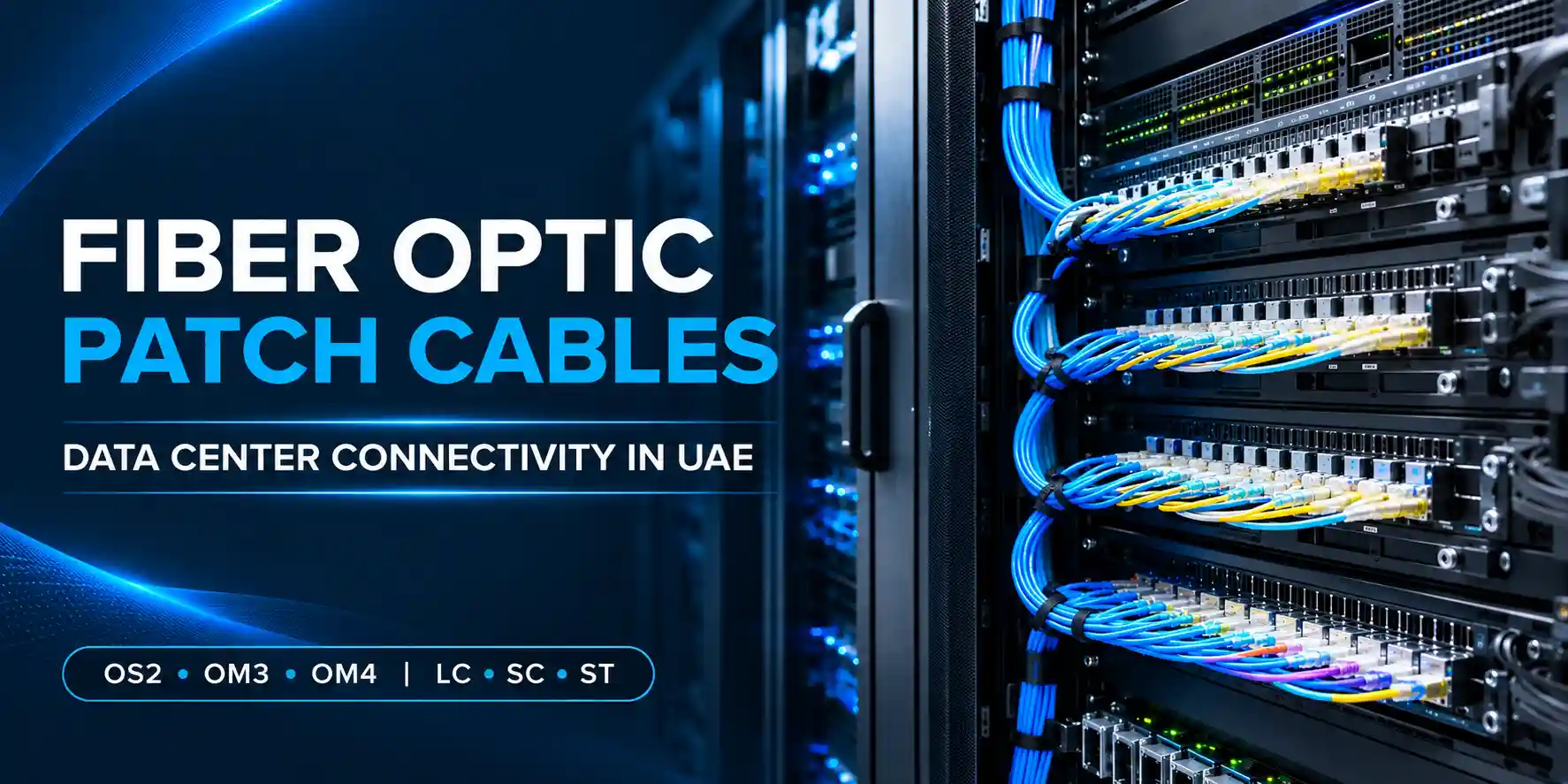
Fiber Optic Patch Cables: The Backbone of Reliable Data
Center Connectivity in UAE
Modern businesses depend on fast, stable and reliable
network connectivity. From data centers and enterprise IT infrastructure to
telecommunications and cloud computing environments, fiber optic technology
plays an important role in moving information between connected systems.
At the centre of these installations are fiber optic patch
cables. These cables connect switches, servers, patch panels and other optical
networking equipment, helping establish reliable communication between devices.
As networking infrastructure continues to expand across the
UAE, understanding the role of fiber optic patch cables, their different
configurations and their applications is important for building efficient
connectivity environments.
Why Fiber
Optic Connectivity Matters in Modern Networks
As businesses handle increasing volumes of data, network
infrastructure must support higher bandwidth and reliable communication.
Traditional copper connections remain useful for many
networking applications, but fiber optic technology offers advantages for
optical links, particularly where higher bandwidth, longer transmission distances
or reduced electromagnetic interference are important.
Fiber optic connectivity is widely used in:
- Enterprise
data centers and server rooms.
- Telecommunications
infrastructure.
- Cloud
computing environments.
- Corporate
networking systems.
- Internet
service provider networks.
- Commercial
buildings and campus networks.
Reliable fiber connections help networking teams establish
structured communication between different parts of their infrastructure.
Understanding
Different Fiber Optic Cable Technologies
Not all fiber optic cables are designed for the same
networking requirements. Single-mode and multimode fiber technologies serve
different applications.
Single Mode Fiber (OS2)
OS2 is a single-mode fiber category commonly used for
longer-distance optical communication. It typically uses a 9/125µm fiber
specification and is widely deployed in telecommunications, enterprise
infrastructure and optical distribution networks.
Its small optical core supports long-distance transmission
when paired with compatible optical equipment.
Multimode Fiber (OM3)
OM3 is a laser-optimized multimode fiber category with a
50/125µm specification. It is commonly used in enterprise networks and data
centers for short-distance, high-speed optical connectivity.
Multimode Fiber (OM4)
OM4 is an enhanced multimode fiber category designed to
provide higher bandwidth-distance performance than OM3. It is suitable for
compatible high-speed networking environments, particularly modern data center
installations.
The choice between OS2, OM3 and OM4 depends on network
architecture, transceiver compatibility, transmission speed and link distance.
The Role
of Fiber Optic Connectors in Network Performance
Fiber optic connectors provide the physical connection
between cables and networking equipment. Selecting compatible connectors is
important for establishing reliable optical links.
LC Connectors
LC connectors feature a compact design and are commonly used
in high-density networking equipment, optical switches and modern data center
patch panels.
SC Connectors
SC connectors use a push-pull connection mechanism and are
widely found in telecommunications installations and fiber distribution
systems.
ST Connectors
ST connectors use a bayonet-style locking mechanism and are
commonly associated with older networking infrastructure and certain
specialized installations.
Different connector configurations are available depending
on the connected equipment. LC-LC, LC-SC, SC-SC and ST-ST are examples of
common fiber patch cable arrangements.
How Fiber
Patch Cables Support Data Center Operations
Data centers depend on reliable connections between servers,
switches, storage systems and distribution panels. Fiber optic patch cables
help establish these connections while supporting organized network
infrastructure.
Some important applications include:
Switch-to-Switch Connectivity: Fiber patch cables
connect compatible network switches and support communication between different
network segments.
Server Room Infrastructure: They connect optical
networking equipment, patch panels and other fiber-enabled devices.
High-Density Network Environments: Compact LC
connectors help support organized connections in environments with limited rack
space.
Telecommunications Distribution: Fiber patch cords
provide connections between optical distribution equipment and compatible
network devices.
Proper connector handling, cable routing and installation
practices also help reduce unnecessary strain and avoid damage to optical
connections.
Fiber
Optic Patch Cable Quality and Installation Considerations
Reliable fiber connectivity depends on more than the cable
itself. Installation quality and component compatibility also matter.
Some important considerations include:
- Connector
Compatibility: Ensure both ends match the optical interfaces of the
connected equipment.
- Fiber
Specifications: Verify OS2, OM3 or OM4 compatibility.
- Connector
Polish: Confirm UPC or APC requirements before connecting optical
components.
- Cable
Length: Use suitable lengths to maintain organized routing without unnecessary
cable loops.
- Bend
Radius: Follow manufacturer recommendations to prevent excessive
bending and potential signal loss.
- Clean
Connectors: Keep optical connector end faces clean to reduce
contamination-related signal problems.
- Cable
Protection: Select suitable jacket specifications, including LSZH
where required by the installation.
These practices help maintain dependable optical connections
across networking environments.
Fiber
Optic Connectivity Solutions from Divine Plus Trading LLC
Reliable networking infrastructure requires compatible
connectivity accessories that meet the requirements of each installation.
Divine Plus Trading LLC supplies fiber optic connectivity
products for IT infrastructure companies, network engineers, system integrators
and commercial networking projects.
The available fiber optic product range includes different
configurations and accessories, such as:
- Single
Mode OS2 fiber optic patch cables.
- Multimode
OM3 and OM4 fiber patch cords.
- LC-LC,
LC-SC and SC-SC connector configurations.
- ST-ST
fiber optic patch cables.
- Fiber
optic pigtails.
- Fiber
optic adapters.
Explore the Fiber Optic
Patch Cable Collection to view available products and specifications.
For commercial requirements, bulk orders and networking
projects, contact Divine Plus Trading LLC to discuss product availability and
quotations.
Frequently Asked Questions
What is the main purpose of a fiber optic patch cable?
A fiber optic patch cable connects optical networking
equipment, including switches, servers, routers and fiber distribution panels,
to establish optical communication.
Why are fiber optic cables used in data centers?
Fiber optic cables support high-bandwidth optical
connectivity and are suitable for connecting networking equipment across data
center infrastructure.
What is the difference between OS2, OM3 and OM4?
OS2 is single-mode fiber commonly used for longer-distance
links. OM3 and OM4 are multimode fiber categories used for shorter-distance,
high-bandwidth applications with compatible equipment.
Which fiber connector is commonly used in data centers?
LC connectors are widely used in modern data centers because
their compact design supports high-density optical connections.
Can LC and SC fiber connectors be connected together?
Yes, using a compatible LC-SC patch cable or suitable
adapter. Connector polish, fiber mode and equipment compatibility must also be
checked.
Where can I find fiber optic patch cables in UAE?
Divine Plus Trading LLC offers fiber optic patch cables and
related connectivity accessories. Visit divinetrd.com to explore the available
product collection.
Conclusion
Fiber optic patch cables are an important part of modern
networking infrastructure. They support communication between servers,
switches, patch panels and telecommunications equipment, helping businesses
build reliable and efficient network environments.
Understanding fiber categories, connector configurations and
installation requirements makes it easier to maintain dependable optical
connectivity.
Whether you are managing a data center, upgrading enterprise
infrastructure or developing a telecommunications network, choosing compatible
fiber optic connectivity products is essential.
Explore the fiber optic collection at Divine Plus Trading
LLC for connectivity products designed to support modern networking
requirements across the UAE.
Recent Posts

Conference Table Power Box in UAE: A Complete Buying Guide for Offices and Meeting Rooms
Fiber Optic Patch Cables: The Backbone of Reliable Data Center Connectivity in UAE
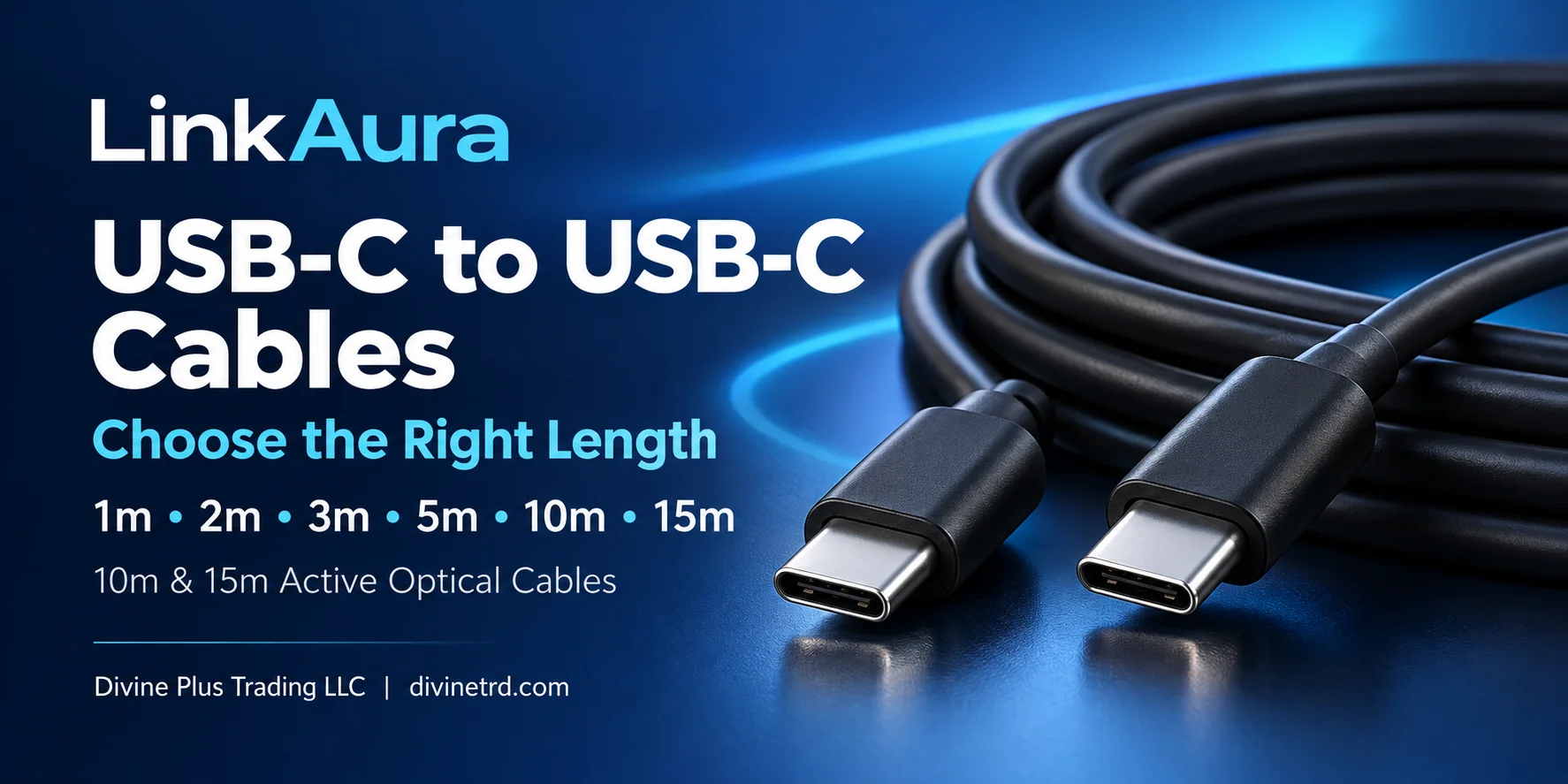
LinkAura USB-C Cables 1m–15m: Buying Guide UAE
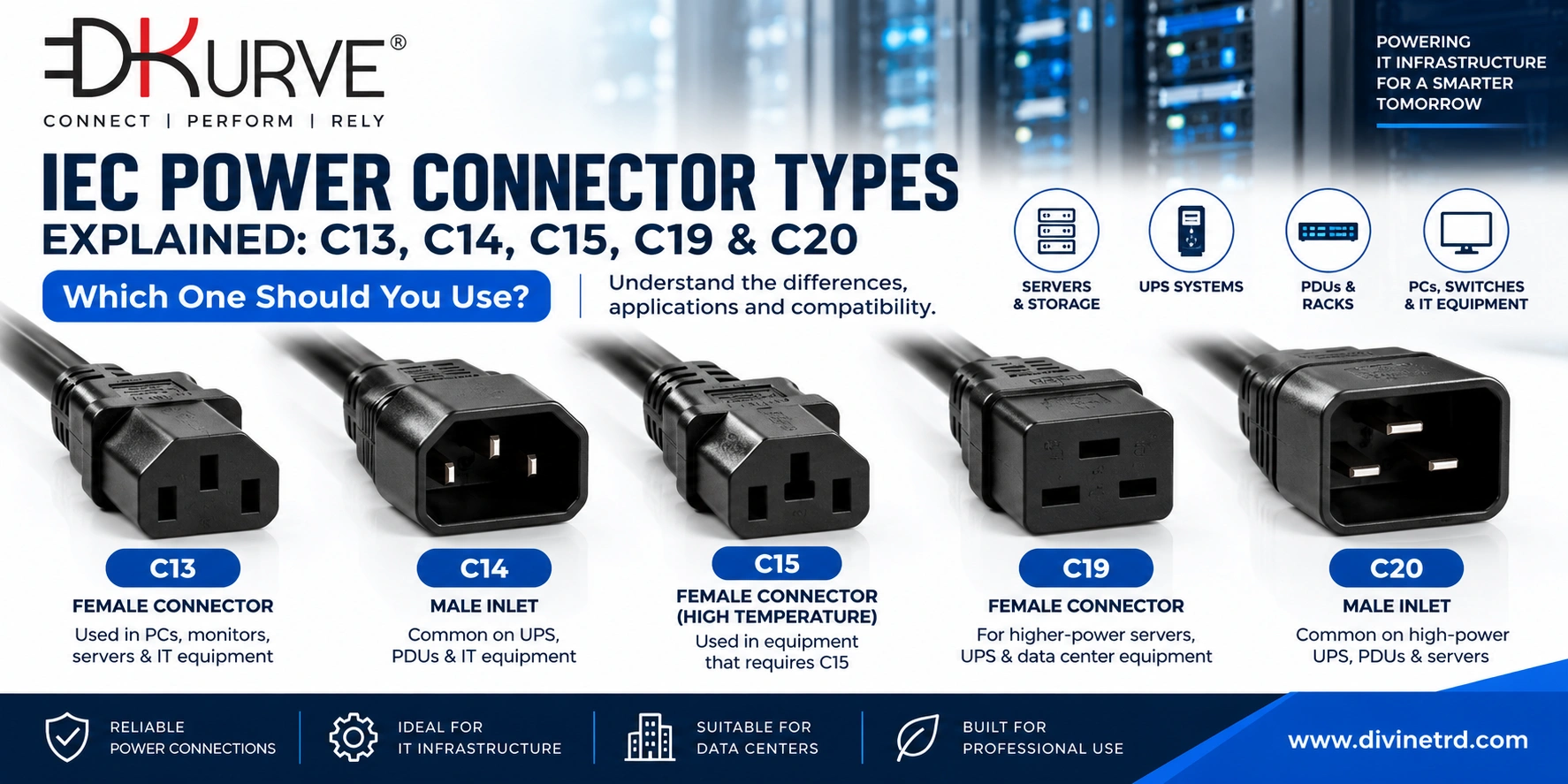
IEC Power Cable Connector Types Explained: C13, C14, C15, C19 & C20 Differences
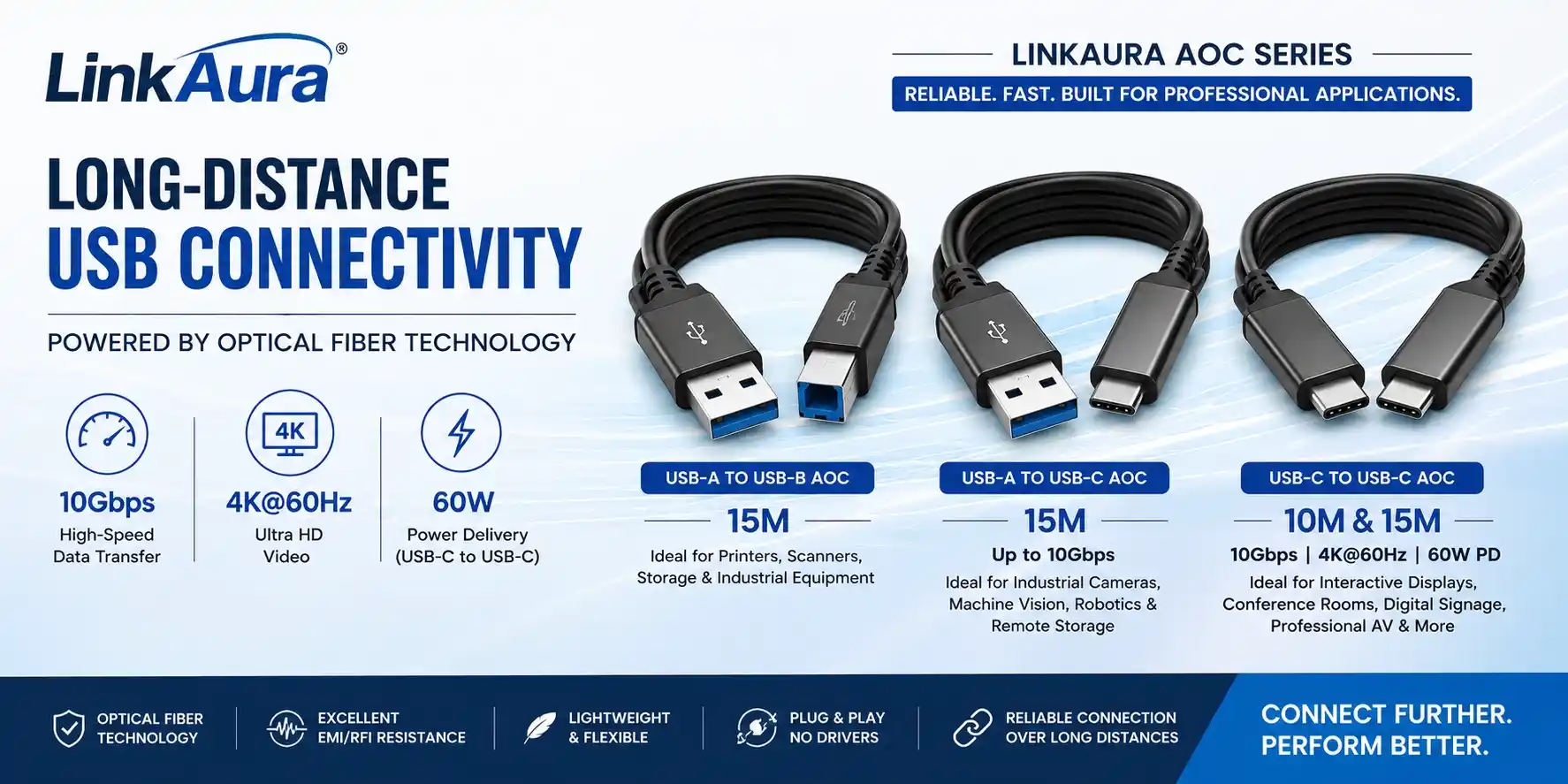
Long-Distance USB Connectivity with LinkAura Active Optical Cables
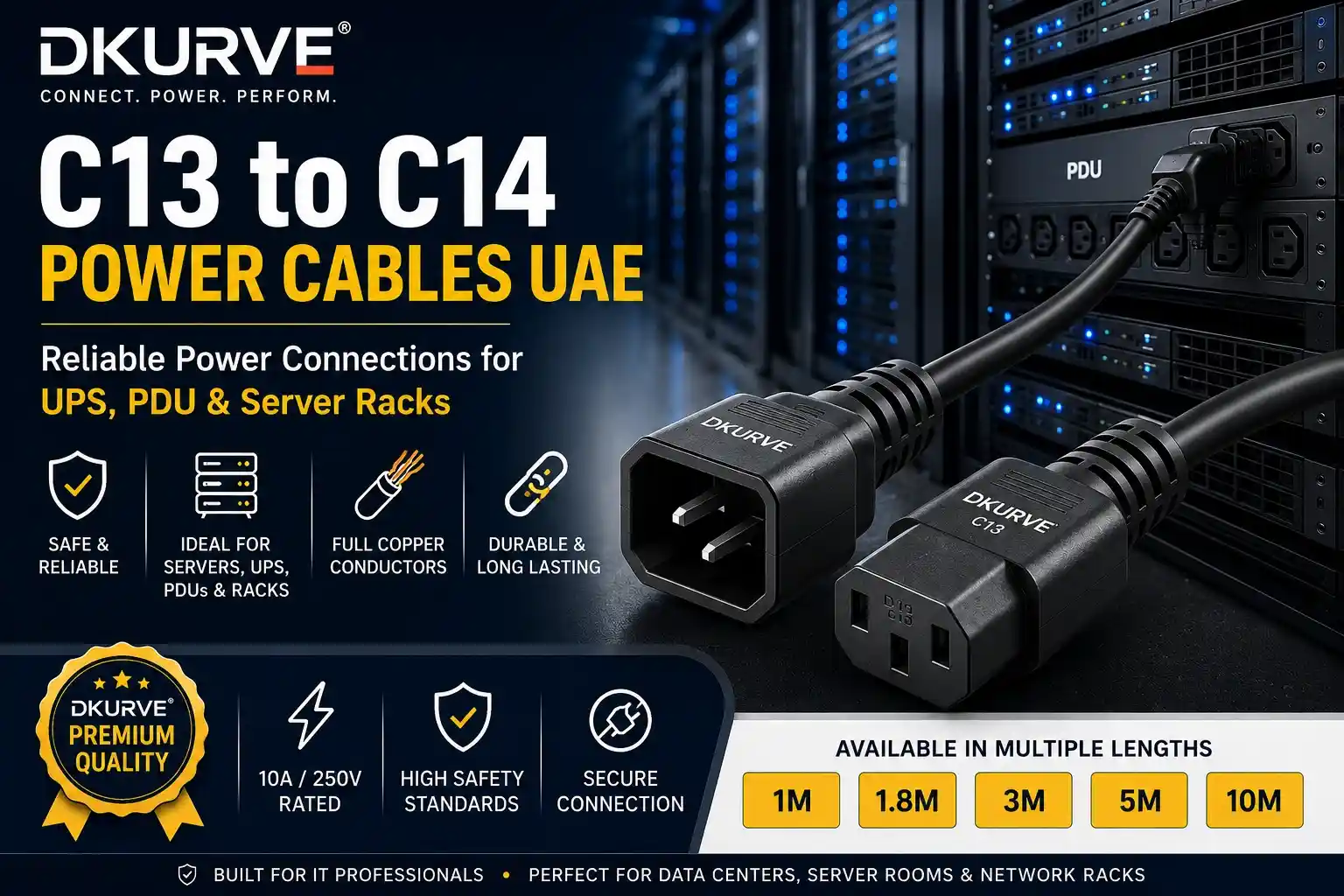
C13 to C14 Power Cable UAE – Complete Guide for UPS, PDU & Server Rack Connections
DKURVE®
Divine Plus Trading LLC is a Dubai-based supplier of IT networking, data center, and connectivity solutions, specializing in IEC power cords, rack PDUs, network cables, fiber optic products, and IT accessories. We provide reliable infrastructure solutions for modern IT and data center environments.